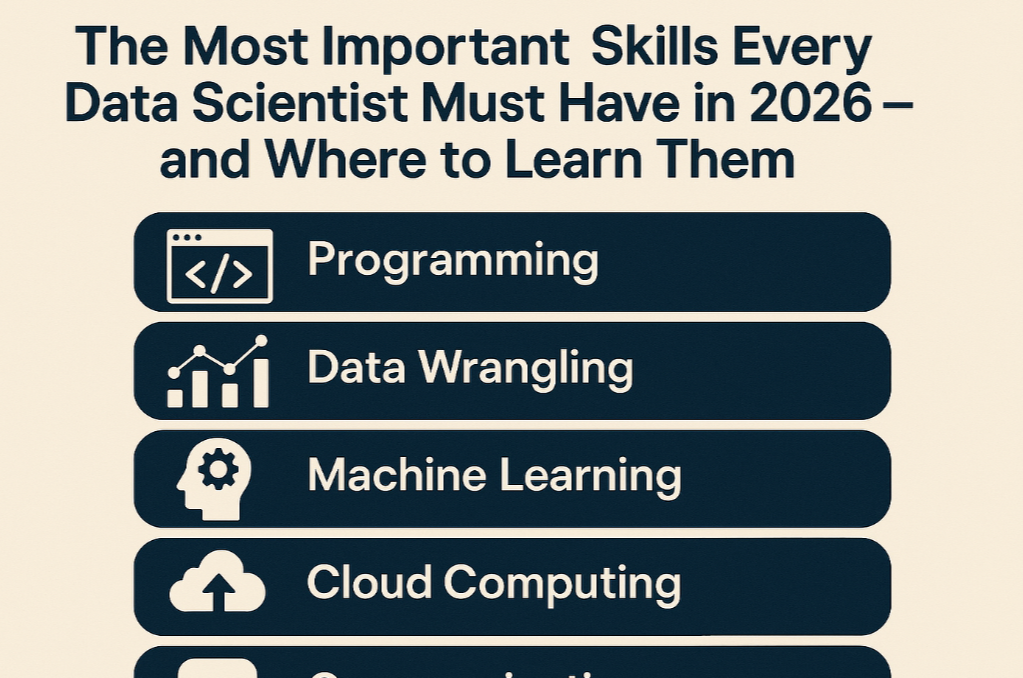
Top Skills You Gain from a Master of Science Data Science Program

In today’s data-driven world, organizations rely heavily on insights drawn from large volumes of information. Businesses, governments, and institutions increasingly depend on skilled professionals who can analyze data and turn it into meaningful decisions. As data continues to grow in importance, advanced education in this field has become a valuable investment for long-term career growth.
A master of science data science program is designed to prepare students for this reality by developing a strong mix of technical, analytical, and practical skills. Beyond learning how to work with numbers and tools, students also gain the ability to think critically, communicate insights clearly, and solve real-world problems. These programs focus on both theory and hands-on experience, helping graduates become confident and capable data professionals.
Strong Data Analysis and Interpretation Skills
One of the most important skills you develop is the ability to analyze data and make sense of it. You learn how to clean raw datasets, identify patterns, and interpret results accurately. Many datasets are messy and incomplete, so understanding how to handle missing values, outliers, and inconsistencies becomes second nature.
More importantly, you learn how to turn numbers into insights. Instead of just producing charts or tables, you are trained to explain what the data means and why it matters. This skill is valuable across industries, from healthcare and finance to marketing and technology.
Programming and Technical Proficiency
A data science master’s program strengthens your programming skills, even if you come from a non-technical background. You typically work with languages such as Python, R, or SQL, which are widely used in the data industry. Over time, writing efficient code, fixing errors, and building reusable scripts becomes part of your daily workflow.
You also gain practical experience with tools and libraries used for data analysis, visualization, and modeling. This technical confidence allows you to work independently on complex tasks and collaborate smoothly with technical teams.
Statistical and Mathematical Thinking
Statistics is the foundation of data science. During the program, you gain a solid understanding of probability, hypothesis testing, regression analysis, and statistical reasoning. These concepts help you judge the reliability of data and avoid misleading conclusions.
Rather than focusing only on formulas, you learn how to apply statistical thinking to real-life problems. This helps you make data-backed decisions with confidence.
Machine Learning and Predictive Modeling
Another valuable skill you gain is building predictive models. You learn how machine learning algorithms work and when to apply them. From classification and clustering to forecasting trends, you understand how to use models to solve practical problems.
You also learn how to evaluate model accuracy and improve performance, which is essential for real-world applications.
Data Visualization and Storytelling
Clear communication is just as important as analysis. You learn how to present data using simple and effective visuals such as charts and dashboards. This helps decision-makers quickly understand key insights.
Alongside visualization, you develop storytelling skills that allow you to explain complex findings in a clear and engaging way, even to non-technical audiences.
Problem-Solving and Critical Thinking
Throughout the program, you work on real-world case studies that strengthen your problem-solving skills. You learn how to define problems, select relevant data, and choose suitable methods to reach practical solutions.
This structured thinking helps you approach challenges logically and confidently.
Business and Domain Understanding
Data science does not exist in isolation. You gain an understanding of how data supports business decisions and strategic planning. This allows you to connect technical analysis with real organizational goals.
Employers value professionals who can translate data insights into actions that create measurable results.
Teamwork and Communication Skills
Most data projects involve collaboration. Group assignments and presentations help you develop teamwork, time management, and communication skills. You learn how to explain ideas clearly and work effectively with others.
These skills are essential in modern workplaces where cross-functional collaboration is common.
Ethical Awareness and Responsible Data Use
Modern data science comes with responsibility. You learn about data privacy, bias, and ethical decision-making. This awareness ensures you handle data responsibly and design fair, transparent models.
Adaptability and Lifelong Learning
Finally, you develop the habit of continuous learning. Since tools and technologies evolve quickly, adaptability becomes one of your strongest assets. This mindset helps you stay relevant and grow throughout your career.
Final Thoughts
A Master of Science Data Science program equips you with far more than technical skills. It builds analytical thinking, communication ability, and ethical awareness, preparing you for a wide range of data-focused roles. These skills help you add real value in any industry that relies on informed, data-driven decisions.